Navigating the world of corporate clients can feel like cracking a secret code. But with the right strategies, you can not only attract them but keep them coming back for more.
Understanding Corporate Clients: Who They Are and Why They Matter

Corporate clients are not just big companies with deep pockets—they represent a unique segment of the market that demands professionalism, reliability, and strategic alignment. These are organizations ranging from multinational enterprises to mid-sized firms that purchase goods or services in bulk, often under long-term contracts. Unlike individual consumers, corporate clients make decisions based on ROI, scalability, and risk mitigation. Their purchasing power significantly impacts revenue streams, making them a prized asset for any B2B business.




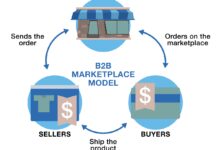

Defining the Corporate Client Profile
A corporate client is typically a registered business entity that engages in contractual agreements for products or services. These clients operate with structured hierarchies, procurement departments, and clearly defined decision-making processes. They often require customized solutions, service level agreements (SLAs), and compliance with industry regulations. Understanding their internal structure—such as C-suite executives, procurement officers, and technical evaluators—is crucial for effective engagement.
- Decision-making involves multiple stakeholders
- Purchase cycles are longer and more complex
- Emphasis on data-driven results and measurable outcomes
Why Corporate Clients Are a Game-Changer
Securing a single corporate client can transform a company’s financial outlook. According to a report by McKinsey & Company, B2B companies with strong corporate client portfolios experience up to 30% higher revenue stability. These clients often bring recurring revenue, open doors to referrals, and enhance brand credibility. Their endorsement can serve as a powerful marketing tool, signaling trust and quality to other potential clients.
“Winning a corporate client isn’t just about closing a deal—it’s about building a partnership that scales with mutual growth.”
How to Identify and Target the Right Corporate Clients
Not all corporations are the right fit for your business. Targeting the wrong ones can waste time, resources, and damage your brand reputation. The key is precision: identifying companies that align with your capabilities, values, and long-term goals. This requires market segmentation, competitive analysis, and a deep understanding of your unique value proposition.
Conducting Market Research for Corporate Client Prospecting
Start by analyzing industry trends and identifying sectors with high demand for your offerings. Use tools like Statista, IBISWorld, or Crunchbase to gather data on company size, growth trajectory, and recent investments. Look for signals such as expansion plans, new product launches, or leadership changes—these often indicate a need for external partners. For example, a tech firm launching a digital transformation initiative may be actively seeking IT service providers.
- Use LinkedIn Sales Navigator to identify decision-makers
- Monitor press releases and earnings calls for strategic shifts
- Analyze competitors’ client lists for market gaps
Building an Ideal Client Profile (ICP)
An Ideal Client Profile (ICP) is a detailed blueprint of the perfect corporate client for your business. It includes factors like industry, annual revenue, employee count, geographic location, technology stack, and pain points. For instance, a SaaS company targeting HR tech solutions might focus on mid-sized enterprises in the healthcare sector with 200–1,000 employees and a history of adopting cloud-based tools. Creating an ICP helps prioritize outreach efforts and increases conversion rates.
“The more specific your ICP, the higher your chances of closing high-value corporate clients.”
Corporate Clients and the Decision-Making Unit (DMU)
Unlike individual buyers, corporate clients involve a Decision-Making Unit (DMU)—a group of individuals who collectively influence or approve a purchase. This group can include initiators, users, influencers, gatekeepers, and decision-makers. Each plays a distinct role, and understanding their motivations is essential for crafting persuasive messaging.
Mapping the Corporate Decision-Making Process
The DMU typically follows a structured process: problem recognition, information search, evaluation of alternatives, purchase decision, and post-purchase evaluation. Your sales strategy should align with each stage. For example, during the information search phase, provide whitepapers, case studies, and webinars. In the evaluation phase, offer demos, pilot programs, and ROI calculators. Ignoring any stage can result in lost opportunities.
- Initiators identify the need for a solution
- Users will operate the product or service daily
- Gatekeepers control access to decision-makers (e.g., executive assistants)
Engaging Multiple Stakeholders Effectively
One-size-fits-all messaging fails with corporate clients. Tailor your communication to each stakeholder’s priorities. CFOs care about cost savings and ROI, while IT managers focus on integration and security. Use role-specific content and personalized outreach. For example, send a financial impact analysis to the CFO and a technical architecture diagram to the CTO. Tools like HubSpot or Salesforce can help track interactions and customize follow-ups.
“In B2B sales, you don’t sell to a company—you sell to people within the company.”
Strategies to Win Corporate Clients in Competitive Markets
Winning corporate clients in saturated markets requires differentiation, credibility, and persistence. Price alone is rarely the deciding factor. Instead, focus on value, trust, and strategic alignment. Companies like IBM and Deloitte dominate their sectors not because they’re the cheapest, but because they’re perceived as reliable partners.
Leveraging Case Studies and Social Proof
Corporate buyers are risk-averse. They want proof that your solution works in real-world scenarios. Case studies showcasing successful implementations with similar companies can be incredibly persuasive. Include metrics like cost reduction, efficiency gains, or revenue growth. For example, a logistics company might highlight how a client reduced delivery times by 25% using their platform. Publish these on your website and share them during sales presentations.
- Include client logos (with permission) for instant credibility
- Use video testimonials for higher engagement
- Highlight ROI with before-and-after comparisons
Offering Pilot Programs and Proof of Concept (PoC)
A pilot program allows corporate clients to test your solution on a small scale before committing fully. This reduces perceived risk and builds confidence. For instance, a cybersecurity firm might offer a 30-day vulnerability assessment for one department. During the pilot, gather feedback, demonstrate value, and refine the offering. A successful PoC often leads directly to a full-scale contract.
“A pilot isn’t just a trial—it’s a strategic onboarding tool that builds trust and proves value.”
Corporate Clients: Building Long-Term Relationships and Retention
Acquiring a corporate client is only the beginning. Retention is where real profitability lies. According to Harvard Business Review, increasing customer retention rates by 5% can boost profits by 25% to 95%. With corporate clients, this means delivering consistent value, proactive communication, and continuous improvement.
Implementing a Client Success Framework
Client success goes beyond customer support—it’s about ensuring clients achieve their desired outcomes. Assign dedicated account managers or client success teams to monitor usage, identify challenges, and suggest optimizations. Use KPIs like adoption rate, satisfaction score (CSAT), and net promoter score (NPS) to measure success. Regular check-ins and quarterly business reviews (QBRs) keep the relationship strong and aligned with evolving goals.
- Set clear success milestones during onboarding
- Provide training and resource libraries
- Anticipate needs before they become issues
Upselling and Cross-Selling to Existing Corporate Clients
Existing corporate clients are the most receptive to additional offerings. Once trust is established, introduce complementary products or premium features. For example, a cloud storage provider might upsell enhanced security or cross-sell backup solutions. The key is relevance—ensure the new offering solves a real problem or enhances current value. Avoid aggressive tactics; instead, position it as a strategic upgrade.
“The easiest sale is the next one to an existing happy client.”
Common Pitfalls When Working with Corporate Clients (And How to Avoid Them)
Even experienced professionals stumble when dealing with corporate clients. Misunderstanding timelines, overpromising, or poor communication can derail relationships. Recognizing these pitfalls early can save your reputation and revenue.
Underestimating the Sales Cycle Length
Corporate sales cycles can last from 3 to 12 months—or longer. Impatience leads to premature follow-ups or aggressive pushes, which can alienate prospects. Instead, map out the expected timeline, set realistic internal goals, and maintain consistent, value-driven communication. Use CRM systems to track touchpoints and avoid ghosting.
- Set expectations early about decision timelines
- Provide regular updates without being pushy
- Stay top-of-mind with educational content
Failing to Align with Internal Stakeholders
Even if you win over one executive, the deal can stall if other stakeholders aren’t on board. Conduct stakeholder analysis early and ensure all key players feel heard. Address concerns transparently and provide tailored information. For example, if the legal team worries about data compliance, share your GDPR or SOC 2 certifications.
“A deal isn’t closed until every critical stakeholder says yes.”
Measuring Success with Corporate Clients: Key Metrics That Matter
To manage corporate client relationships effectively, you need more than gut feeling—you need data. Tracking the right metrics helps you identify strengths, spot risks, and optimize strategies. These KPIs should be reviewed regularly and shared with both your team and the client.
Customer Lifetime Value (CLV) and Churn Rate
CLV measures the total revenue a corporate client generates over their relationship with your company. High CLV indicates strong retention and upselling success. Churn rate, on the other hand, shows how many clients you lose over time. A high churn rate signals dissatisfaction or poor onboarding. Aim to increase CLV while reducing churn through proactive engagement and value delivery.
- Calculate CLV using average contract value × average relationship length
- Monitor churn monthly and investigate root causes
- Compare CLV across industries to benchmark performance
Net Promoter Score (NPS) and Customer Satisfaction (CSAT)
NPS measures client loyalty by asking, “How likely are you to recommend us to a colleague?” Responses range from 0 to 10, with promoters (9–10), passives (7–8), and detractors (0–6). Subtract the percentage of detractors from promoters to get your NPS. CSAT, usually measured via post-interaction surveys, gauges satisfaction with specific touchpoints. Both metrics provide early warnings of potential issues.
“What gets measured gets managed. Track NPS and CSAT religiously.”
What defines a corporate client?
A corporate client is a business entity—ranging from startups to multinational corporations—that purchases goods or services for operational, strategic, or commercial purposes. These clients typically engage through formal contracts, involve multiple decision-makers, and prioritize long-term value over short-term savings.
How long does it take to win a corporate client?
The sales cycle for corporate clients varies widely but typically ranges from 3 to 12 months. Factors like company size, industry, procurement policies, and solution complexity influence the timeline. Building trust, demonstrating value, and navigating internal approvals all contribute to the duration.
What are the best ways to build trust with corporate clients?
Trust is built through consistency, transparency, and proof of value. Deliver on promises, provide case studies and references, maintain open communication, and assign dedicated account managers. Regular business reviews and proactive problem-solving also strengthen trust over time.
Why do corporate clients churn, and how can it be prevented?
Common reasons for churn include poor onboarding, lack of perceived value, communication gaps, and better offers from competitors. Prevention strategies include implementing a client success program, conducting regular check-ins, measuring satisfaction, and continuously delivering measurable ROI.
Can small businesses serve corporate clients?
Absolutely. Many corporations outsource to niche providers or innovative startups. Small businesses can compete by offering specialized expertise, agility, and personalized service. The key is positioning—highlighting unique strengths and proving reliability through case studies and testimonials.
Winning and retaining corporate clients is both an art and a science. It requires deep market understanding, strategic positioning, and relationship-centric execution. From identifying the right prospects to navigating complex decision-making units, every step demands precision and patience. Once onboarded, the focus must shift to delivering continuous value, measuring performance, and growing the partnership. Avoid common pitfalls by respecting timelines, aligning with stakeholders, and maintaining transparency. With the right approach, corporate clients can become your most valuable asset—driving revenue, credibility, and long-term success.
Further Reading: