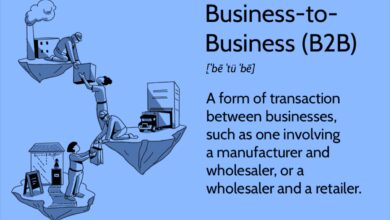
Ever wondered what makes some B2B companies grow faster, sell smarter, and scale effortlessly? The secret often lies in mastering the concept of b2b prime—a strategic edge that transforms ordinary businesses into industry leaders. Let’s dive into what it really means and how you can leverage it.
What Exactly Is B2B Prime?

The term b2b prime isn’t just a buzzword—it’s a framework for excellence in the business-to-business ecosystem. It represents companies that have optimized their operations, customer relationships, and digital presence to become the first choice for other businesses. These organizations don’t just participate in the market; they lead it.





Defining the B2B Prime Concept
At its core, b2b prime refers to a business that has achieved peak performance in serving other businesses. This includes superior product quality, seamless integration capabilities, exceptional customer support, and data-driven decision-making. Think of it as the ‘gold standard’ in B2B relationships.
- Operational efficiency and scalability
- Deep understanding of client pain points
- Proactive innovation and market adaptation
According to McKinsey, top-tier B2B companies are 1.5x more likely to exceed revenue goals due to superior client alignment and digital maturity.
How B2B Prime Differs from Traditional B2B Models
Traditional B2B models often rely on long sales cycles, relationship-based selling, and manual processes. In contrast, b2b prime companies leverage automation, AI-driven insights, and self-serve platforms to accelerate decision-making.
- Speed-to-value: faster onboarding and ROI realization
- Data-centric: decisions based on analytics, not intuition
- Customer empowerment: tools that allow clients to manage services independently
“The future of B2B isn’t about who sells the most—it’s about who delivers the most value, fastest.” — Harvard Business Review
Why B2B Prime Is the Future of Business Growth
The global B2B market is projected to reach $20.9 trillion by 2027, according to Statista. Within this massive landscape, only those who adopt a b2b prime mindset will capture disproportionate market share.
Accelerated Decision-Making Cycles
Modern B2B buyers expect instant access to information, pricing, and demos. B2B prime companies meet this demand with intuitive websites, chatbots, and interactive product tours.
- 87% of B2B buyers prefer to research independently before speaking to a sales rep (Gartner)
- Companies with robust self-serve portals see 40% shorter sales cycles
- AI-powered recommendation engines increase conversion by up to 35%
Superior Customer Retention and Expansion
Acquiring a new customer costs 5–7x more than retaining an existing one. B2B prime organizations focus on Customer Success as a growth engine, not just a support function.
- They use predictive analytics to identify at-risk accounts
- Offer tiered onboarding based on customer maturity
- Deploy success managers who act as strategic advisors
For example, Salesforce attributes over 30% of its recurring revenue to expansion within existing accounts—proof of a true b2b prime strategy.
The 7 Pillars of a B2B Prime Strategy
Building a b2b prime business isn’t accidental. It requires deliberate investment across seven key areas. Let’s break them down.
1. Hyper-Personalized Customer Experiences
One-size-fits-all messaging is dead. B2B prime companies use data segmentation and behavioral tracking to deliver tailored content, offers, and journeys.
- Dynamic website content based on visitor role (e.g., CFO vs. CTO)
- Email sequences triggered by product usage patterns
- Custom dashboards showing ROI metrics relevant to specific industries
Tools like HubSpot and Marketo enable this level of personalization at scale.
2. Seamless Integration and Interoperability
B2B buyers don’t want standalone tools—they want solutions that fit into their existing tech stack. B2B prime vendors offer pre-built integrations with platforms like Slack, Salesforce, and Microsoft Teams.
- API-first architecture for easy customization
- Open developer portals with SDKs and documentation
- Partnerships with ecosystem leaders (e.g., AWS Marketplace, Shopify App Store)
As noted by Forbes Tech Council, companies with strong integration capabilities grow 2.3x faster than peers.
3. Data-Driven Sales Enablement
Sales teams in b2b prime organizations are armed with real-time insights. From intent data to usage analytics, every interaction is informed by data.
- Intent signals from platforms like Bombora or 6sense
- Usage-based alerts (e.g., “Customer hasn’t logged in for 14 days”)
- AI-generated talking points based on recent customer activity
This shift turns sales reps from pitch-pushers into trusted consultants.
4. Customer-Centric Product Development
In a b2b prime model, product roadmaps are co-created with customers. Feedback loops are tight, and feature releases are aligned with actual business needs.
- Customer advisory boards with quarterly input sessions
- In-app feedback widgets with direct routing to product teams
- Transparent public roadmaps (e.g., Notion, Asana)
This approach reduces churn and increases NPS by up to 50 points, according to ProductPlan.
5. Scalable Onboarding and Training
Time-to-value is critical. B2B prime companies invest heavily in onboarding automation and education.
- Interactive walkthroughs and checklists
- Role-based training paths (admin, user, analyst)
- Certification programs that deepen engagement
ZoomInfo, for instance, reduced time-to-competency by 60% after launching a gamified onboarding platform.
6. Proactive Customer Success Management
Success isn’t reactive—it’s predictive. B2B prime firms use health scores, engagement metrics, and AI to anticipate issues before they arise.
- Automated health scorecards updated weekly
- Escalation workflows for at-risk accounts
- Quarterly business reviews with actionable insights
These practices lead to retention rates above 90%, far exceeding the industry average of 75%.
7. Thought Leadership and Ecosystem Influence
B2B prime companies don’t just sell products—they shape industries. They publish research, host events, and collaborate on standards.
- Original research reports (e.g., State of Sales, Future of Work)
- Sponsorship of industry conferences and webinars
- Contributions to open-source projects or regulatory discussions
This builds trust and positions the brand as an indispensable partner.
How to Measure Your B2B Prime Readiness
Not sure if your company is on the b2b prime path? Use this diagnostic framework to assess your maturity.
Key Performance Indicators (KPIs)
Track these metrics to gauge progress toward b2b prime status:
- Customer Lifetime Value (LTV) to Customer Acquisition Cost (CAC) ratio (ideal: 3:1 or higher)
- Net Revenue Retention (NRR) rate (target: 110%+)
- Time-to-first-value (TTFV) in days (benchmark: under 14)
- Customer Health Score average (scale: 0–100, target: 80+)
Operational Maturity Assessment
Rate your organization on a scale of 1–5 across these dimensions:
- Data integration across departments (CRM, marketing, support)
- Automation of repetitive tasks (onboarding, billing, renewals)
- Use of AI/ML in forecasting and personalization
- Frequency of customer feedback collection and action
Average score below 3? You’re in the early stages. Above 4? You’re likely already exhibiting b2b prime traits.
Case Studies: Companies Mastering B2B Prime
Real-world examples show how the b2b prime model drives results.
ServiceNow: From IT Tool to Enterprise Backbone
ServiceNow evolved from an IT service management tool into a mission-critical platform for enterprises. By focusing on workflow automation, integration depth, and customer success, they achieved:
- Over $7 billion in annual revenue (2023)
- Net Revenue Retention of 112%
- Expansion into HR, security, and customer workflows
Their Customer Success Program includes dedicated architects and ROI tracking—hallmarks of b2b prime excellence.
HubSpot: Scaling SMB to Enterprise
HubSpot transformed from a marketing tool for small businesses into a full CRM platform serving mid-market and enterprise clients. Their b2b prime strategy included:
- Launch of HubSpot Academy with free certifications
- API expansion for 1,500+ app integrations
- Enterprise-grade security and compliance features
Result? Over $1.8 billion in revenue and a Net Promoter Score of 64—well above the SaaS average.
Stripe: Developer-First, Business-Second
Stripe built its b2b prime status by winning developers first. Their clean API, extensive documentation, and sandbox environment made integration effortless.
- Used by 100,000+ businesses globally
- Expanded into banking, tax, and fraud prevention
- Launched “Stripe Atlas” to help startups incorporate
Their developer-centric approach created a flywheel of adoption, making them the default payment infrastructure for modern B2B companies.
Common Pitfalls to Avoid When Pursuing B2B Prime
Even with the best intentions, many companies stumble on the path to b2b prime status. Here’s what to watch out for.
Overcomplicating the Customer Journey
Some vendors add too many features or steps, creating friction. B2B prime is about simplicity, not complexity.
- Avoid forcing customers into lengthy onboarding calls
- Don’t hide key features behind paywalls or approvals
- Ensure mobile and tablet compatibility for all workflows
Remember: the easier it is to get value, the faster adoption spreads.
Neglecting Internal Alignment
A b2b prime experience requires Sales, Marketing, Product, and Support to work as one team. Silos kill momentum.
- Implement shared KPIs across departments
- Hold cross-functional customer review meetings
- Use a single source of truth (e.g., CRM) for all customer data
As Harvard Business Review notes, aligned organizations achieve 30% higher customer satisfaction.
Underinvesting in Customer Education
Even the best product fails if users don’t know how to use it. B2B prime companies treat education as a core product feature.
- Create video tutorials, knowledge bases, and live training
- Offer certifications that boost user confidence
- Track course completion and correlate with retention
Companies that invest in education see 2x higher feature adoption rates.
The Role of Technology in Enabling B2B Prime
Technology isn’t just a tool—it’s the foundation of b2b prime operations. Let’s explore the key platforms driving this transformation.
CRM and Customer Data Platforms (CDPs)
A unified view of the customer is non-negotiable. CRMs like Salesforce and CDPs like Segment consolidate data from every touchpoint.
- 360-degree customer profiles with behavioral history
- Real-time segmentation for targeted campaigns
- Automated workflows based on triggers (e.g., login, upgrade)
Without this, personalization and proactive support are impossible.
AI and Machine Learning Tools
AI powers everything from lead scoring to churn prediction. B2B prime companies use it to anticipate needs.
- 6sense for buyer intent detection
- Gong for conversation intelligence
- ChurnZero for predictive retention analytics
These tools turn raw data into actionable insights, giving sales and success teams a strategic edge.
Automation and Workflow Platforms
Zapier, Workato, and Microsoft Power Automate connect apps and eliminate manual work. This is critical for scaling efficiently.
- Auto-create support tickets from email
- Synchronize billing and CRM data
- Trigger onboarding sequences upon payment confirmation
Automation frees teams to focus on high-value activities, not data entry.
Future Trends Shaping B2B Prime in 2025 and Beyond
The b2b prime model will continue evolving. Here’s what’s on the horizon.
Rise of the Composable Enterprise
Businesses will increasingly adopt modular, best-of-breed tools instead of monolithic suites. B2B prime vendors must offer plug-and-play solutions.
- Microservices architecture for flexible deployment
- Pre-built connectors for common workflows
- Low-code/no-code customization options
This trend favors agility over legacy scale.
AI-Powered Self-Service Dominance
By 2025, Gartner predicts that 80% of B2B interactions will occur without human involvement. B2B prime companies will lead this shift.
- AI chatbots that handle complex queries
- Virtual assistants for onboarding and troubleshooting
- Automated contract renewals and upsell recommendations
The goal: deliver instant value, 24/7.
Sustainability and Ethical Sourcing as Differentiators
B2B buyers are increasingly evaluating vendors on ESG (Environmental, Social, Governance) criteria. B2B prime companies will lead in transparency.
- Publish carbon footprint reports
- Offer green hosting or energy-efficient solutions
- Ensure ethical labor practices in supply chains
According to IBM IBV, 68% of B2B decision-makers consider sustainability when choosing vendors.
What is B2B Prime?
B2B Prime refers to a business that has optimized its operations, customer experience, and technology to become a top-tier provider in the B2B space. It’s characterized by high customer retention, rapid time-to-value, and data-driven decision-making.
How do I know if my company is B2B Prime?
Assess your Net Revenue Retention (target: 110%+), Customer Health Scores (target: 80+), and time-to-first-value (under 14 days). If you’re hitting these benchmarks and have strong integration and customer success programs, you’re likely on the path to B2B Prime status.
What industries benefit most from B2B Prime strategies?
While applicable across sectors, SaaS, fintech, logistics, and industrial tech see the highest ROI from B2B Prime strategies due to their reliance on integration, scalability, and recurring revenue models.
Can small businesses achieve B2B Prime status?
Absolutely. Size doesn’t matter—focus does. Small businesses can achieve B2B Prime status by excelling in customer experience, leveraging automation, and building deep relationships, even with limited resources.
What technologies are essential for B2B Prime?
Key technologies include CRM platforms (e.g., Salesforce), customer data platforms (CDPs), AI-driven analytics tools (e.g., 6sense, Gong), and automation platforms (e.g., Zapier). These enable personalization, efficiency, and scalability.
Reaching b2b prime status isn’t about being the biggest—it’s about being the best partner for your customers. It requires a relentless focus on value delivery, operational excellence, and innovation. By embracing the seven pillars outlined—personalization, integration, data-driven sales, customer-centric product development, scalable onboarding, proactive success management, and thought leadership—any organization can position itself as a leader in the B2B landscape. The future belongs to those who don’t just sell to businesses, but empower them. That’s the true essence of b2b prime.
Further Reading: