In today’s hyper-connected global economy, B2B (Business-to-Business) isn’t just a model—it’s a powerhouse. From startups to Fortune 500 giants, understanding B2B dynamics unlocks massive growth, deeper partnerships, and long-term profitability. Let’s dive into what makes B2B thrive.
What Exactly Is B2B (Business-to-Business)?

The term B2B (Business-to-Business) refers to transactions between two businesses rather than between a business and individual consumers (which is B2C). These transactions can involve the sale of raw materials, software platforms, consulting services, or even entire supply chain solutions. Unlike B2C, where emotional appeal often drives decisions, B2B purchasing is typically logical, data-driven, and involves multiple stakeholders.




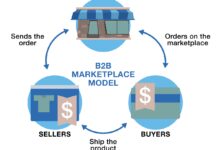

Core Definition and Scope
B2B (Business-to-Business) encompasses any commercial interaction where one company provides products or services to another. This includes manufacturers selling components to assemblers, SaaS companies offering CRM tools to enterprises, or logistics firms supporting e-commerce platforms. The scale can vary from small local vendors to multinational corporations engaging in billion-dollar contracts.
B2B (Business-to-Business) – B2B (Business-to-Business) menjadi aspek penting yang dibahas di sini.
- Transactions are often high-volume and high-value.
- Decision-making processes are longer and more complex.
- Relationships are built on trust, reliability, and performance metrics.
“B2B is not just about selling—it’s about solving business problems with scalable solutions.” — Harvard Business Review
How B2B Differs from B2C
While both models aim to generate revenue, B2B (Business-to-Business) operates under fundamentally different principles than B2C. In B2C, marketing often targets emotions, impulse, and convenience. In contrast, B2B decisions are rational, ROI-focused, and involve detailed cost-benefit analyses.
- B2B buyers expect detailed product specifications, service level agreements (SLAs), and long-term contracts.
- Sales cycles in B2B can last months or even years, compared to minutes or hours in B2C.
- Customer support in B2B is often personalized and proactive, not just reactive.
For a deeper comparison, check out this comprehensive guide from Investopedia on B2B vs B2C.
The Evolution of B2B (Business-to-Business) Over Time
The B2B (Business-to-Business) landscape has undergone a dramatic transformation over the past century. What once relied on face-to-face meetings and paper catalogs has evolved into a digital-first, data-driven ecosystem powered by AI, automation, and global connectivity.
B2B (Business-to-Business) – B2B (Business-to-Business) menjadi aspek penting yang dibahas di sini.
Historical Roots of B2B
B2B has existed as long as commerce itself. In the industrial era, manufacturers relied on wholesalers and distributors to move goods. These relationships were built on personal trust and long-term contracts. The advent of telephones and fax machines in the 20th century accelerated communication, but the process remained largely manual and regional.
- Early B2B transactions were localized and relationship-dependent.
- Supply chains were linear and less transparent.
- Marketing was limited to trade shows, print ads, and direct sales calls.
Digital Transformation in B2B
The internet revolutionized B2B (Business-to-Business) by enabling global reach, real-time communication, and e-commerce platforms. Companies like Alibaba and ThomasNet emerged as digital marketplaces connecting suppliers and buyers worldwide. Today, B2B e-commerce is projected to reach $20.9 trillion by 2027, according to Forrester.
- Cloud-based platforms allow instant access to product catalogs and pricing.
- AI-powered chatbots handle initial inquiries and qualify leads.
- Data analytics enable personalized marketing and predictive sales forecasting.
“Digital transformation isn’t optional in B2B—it’s existential.” — McKinsey & Company
Key Characteristics of B2B (Business-to-Business) Transactions
B2B (Business-to-Business) transactions are defined by several unique characteristics that distinguish them from consumer-focused models. Understanding these traits is essential for crafting effective strategies, building strong client relationships, and driving sustainable growth.
B2B (Business-to-Business) – B2B (Business-to-Business) menjadi aspek penting yang dibahas di sini.
Longer Sales Cycles
One of the most defining features of B2B is the extended sales cycle. Unlike B2C, where a customer might buy a product immediately after seeing an ad, B2B purchases often require multiple meetings, demonstrations, legal reviews, and internal approvals.
- Decision-making involves committees or procurement teams.
- Buyers conduct extensive research and request case studies or references.
- Negotiations may include pricing tiers, volume discounts, and service guarantees.
This complexity means that B2B marketers must focus on nurturing leads over time through content marketing, email sequences, and relationship-building efforts.
Higher Order Values and Volume
B2B transactions typically involve significantly higher monetary values than B2C. A single contract can be worth thousands or millions of dollars, especially in industries like manufacturing, IT services, or enterprise software.
B2B (Business-to-Business) – B2B (Business-to-Business) menjadi aspek penting yang dibahas di sini.
- Volume-based pricing is common, encouraging bulk purchases.
- Contracts often span several years with recurring revenue models.
- Customer lifetime value (CLV) is a critical metric in B2B.
For example, a company like Salesforce doesn’t sell a one-time license; it offers annual subscriptions with add-ons, ensuring ongoing revenue and deeper client integration.
Relationship-Driven Model
In B2B (Business-to-Business), relationships are everything. Buyers don’t just purchase a product—they invest in a partnership. Trust, reliability, and consistent performance are non-negotiable.
- Account managers often serve as dedicated points of contact.
- Regular check-ins and performance reviews are standard practice.
- Customization and co-development of solutions are common.
A strong relationship can lead to upselling, referrals, and long-term contracts. According to a study by Gartner, 89% of B2B buyers say customer experience is a key factor in purchasing decisions.
B2B (Business-to-Business) – B2B (Business-to-Business) menjadi aspek penting yang dibahas di sini.
Major Industries Dominated by B2B (Business-to-Business)
B2B (Business-to-Business) isn’t confined to a single sector—it spans across numerous industries, each with its own dynamics, challenges, and opportunities. Some industries are almost entirely B2B-focused, while others blend B2B and B2C models.
Manufacturing and Industrial Supplies
This is one of the oldest and most established B2B sectors. Manufacturers rely on a vast network of suppliers for raw materials, machinery, and components. For instance, an automotive company sources steel, electronics, and tires from various B2B vendors.
- Just-in-time (JIT) inventory systems require precise coordination.
- Quality control and compliance are critical.
- Digital procurement platforms streamline ordering and tracking.
Companies like Siemens and Bosch operate heavily in this space, offering industrial automation and engineering solutions to other businesses.
B2B (Business-to-Business) – B2B (Business-to-Business) menjadi aspek penting yang dibahas di sini.
Information Technology and SaaS
The rise of cloud computing has made IT one of the fastest-growing B2B sectors. Software-as-a-Service (SaaS) companies like Microsoft, Zoom, and Slack provide tools that businesses use daily for communication, project management, and data analysis.
- Subscription-based models ensure recurring revenue.
- Integration with existing systems is a major selling point.
- Security, uptime, and scalability are top concerns for buyers.
According to Statista, the global SaaS market is expected to exceed $230 billion by 2024, highlighting the massive demand for B2B software solutions.
Professional Services and Consulting
Firms offering legal, financial, marketing, or management consulting services operate primarily in the B2B space. These services help other businesses improve efficiency, comply with regulations, or enter new markets.
B2B (Business-to-Business) – B2B (Business-to-Business) menjadi aspek penting yang dibahas di sini.
- Expertise and reputation are key differentiators.
- Pricing is often project-based or hourly.
- Long-term advisory roles are common in strategic consulting.
Firms like Deloitte, PwC, and Accenture generate billions in revenue by serving other businesses, proving the immense value of professional B2B services.
B2B (Business-to-Business) Marketing Strategies That Work
Marketing in the B2B (Business-to-Business) world requires a different approach than B2C. It’s less about flashy ads and more about building credibility, demonstrating expertise, and guiding prospects through a complex decision-making journey.
Content Marketing and Thought Leadership
One of the most effective B2B marketing strategies is content marketing. By publishing whitepapers, case studies, webinars, and industry reports, companies position themselves as thought leaders.
B2B (Business-to-Business) – B2B (Business-to-Business) menjadi aspek penting yang dibahas di sini.
- Educational content helps buyers understand complex solutions.
- SEO-optimized blogs attract organic traffic from decision-makers.
- Gated content (e.g., downloadable guides) captures leads for nurturing.
For example, HubSpot’s blog and resource library have made it a go-to source for marketing professionals, driving massive lead generation.
Account-Based Marketing (ABM)
ABM is a highly targeted approach where marketing and sales teams collaborate to create personalized campaigns for specific high-value accounts.
- Instead of broad outreach, ABM focuses on a select few companies.
- Customized messaging and offers increase conversion rates.
- Success is measured by engagement and deal size, not just lead volume.
According to ABM Institute, companies using ABM report 200% higher sales pipeline efficiency compared to traditional methods.
B2B (Business-to-Business) – B2B (Business-to-Business) menjadi aspek penting yang dibahas di sini.
Social Selling and LinkedIn Engagement
Social media, particularly LinkedIn, has become a powerful tool for B2B sales professionals. Unlike consumer platforms, LinkedIn allows direct engagement with decision-makers, influencers, and procurement teams.
- Sales reps share insights, comment on industry trends, and build credibility.
- Direct messaging and connection requests can initiate conversations.
- Company pages showcase expertise, client testimonials, and job openings.
A study by LinkedIn found that 80% of B2B leads come from LinkedIn, making it the most effective social platform for B2B outreach.
The Role of Technology in Modern B2B (Business-to-Business)
Technology is the backbone of today’s B2B (Business-to-Business) operations. From CRM systems to AI-driven analytics, digital tools are transforming how businesses connect, sell, and deliver value.
B2B (Business-to-Business) – B2B (Business-to-Business) menjadi aspek penting yang dibahas di sini.
Customer Relationship Management (CRM) Systems
CRM platforms like Salesforce, HubSpot, and Zoho are essential for managing B2B relationships. They centralize customer data, track interactions, and automate follow-ups.
- Sales teams use CRMs to monitor deal stages and forecast revenue.
- Marketing teams segment audiences and personalize campaigns.
- Customer support teams access history and resolve issues faster.
According to Salesforce, high-performing sales teams are 2.5x more likely to use CRM effectively.
Automation and AI in B2B Sales
Artificial intelligence and automation are streamlining B2B sales processes. Chatbots qualify leads, AI analyzes buyer behavior, and automated workflows reduce manual tasks.
B2B (Business-to-Business) – B2B (Business-to-Business) menjadi aspek penting yang dibahas di sini.
- Predictive analytics identify high-intent prospects.
- Email automation nurtures leads based on behavior.
- AI-powered recommendations suggest next-best actions for sales reps.
Companies like Gong and Chorus use AI to analyze sales calls and provide coaching insights, improving win rates and team performance.
E-Commerce and Digital Marketplaces
B2B e-commerce platforms are replacing traditional procurement methods. Buyers now expect the same ease of use they experience in B2C, but with enterprise-grade features.
- Self-service portals allow 24/7 ordering and tracking.
- Integration with ERP systems ensures seamless data flow.
- Dynamic pricing and personalized catalogs enhance the buying experience.
Amazon Business, for example, has grown into a $30+ billion B2B marketplace, proving that digital convenience is no longer a B2C-only advantage.
B2B (Business-to-Business) – B2B (Business-to-Business) menjadi aspek penting yang dibahas di sini.
Challenges and Solutions in B2B (Business-to-Business)
Despite its potential, B2B (Business-to-Business) comes with unique challenges. From complex decision-making to intense competition, businesses must navigate obstacles to succeed.
Complex Decision-Making Processes
One of the biggest hurdles in B2B is the multi-layered decision-making process. A single purchase may require approval from finance, IT, operations, and senior management.
- Solution: Map the buyer’s journey and identify key stakeholders.
- Create tailored content for each role (e.g., technical specs for IT, ROI analysis for finance).
- Use consultative selling to guide buyers through their internal process.
According to Capterra, 68% of B2B buyers feel vendors don’t understand their needs—highlighting the need for deeper empathy and research.
B2B (Business-to-Business) – B2B (Business-to-Business) menjadi aspek penting yang dibahas di sini.
Intense Competition and Market Saturation
Many B2B markets are crowded, especially in tech and professional services. Standing out requires more than just a good product—it demands a strong brand, unique value proposition, and exceptional customer experience.
- Solution: Differentiate through specialization (e.g., niche industries or verticals).
- Offer superior onboarding, training, and support.
- Leverage customer success stories and testimonials.
For example, Slack didn’t win just because of features—it won by offering a better user experience and seamless integration, even in a crowded collaboration market.
Data Privacy and Security Concerns
B2B buyers are increasingly concerned about data security, especially when adopting cloud-based tools. A single breach can damage trust and lead to contract termination.
B2B (Business-to-Business) – B2B (Business-to-Business) menjadi aspek penting yang dibahas di sini.
- Solution: Be transparent about security protocols and compliance (e.g., GDPR, SOC 2).
- Offer regular audits, encryption, and access controls.
- Provide clear documentation and training on data handling.
According to IBM’s Cost of a Data Breach Report, the average cost of a data breach in 2023 was $4.45 million—making security a top priority in B2B negotiations.
What is B2B (Business-to-Business)?
B2B (Business-to-Business) refers to commercial transactions between two businesses, such as a manufacturer selling to a distributor or a software company providing tools to enterprises. It contrasts with B2C, where businesses sell directly to consumers.
B2B (Business-to-Business) – B2B (Business-to-Business) menjadi aspek penting yang dibahas di sini.
How does B2B marketing differ from B2C?
B2B marketing is more relationship-driven, data-focused, and involves longer sales cycles. It emphasizes ROI, technical specifications, and decision-making by committees, unlike B2C, which often targets emotions and impulse buying.
What are the most effective B2B marketing strategies?
B2B (Business-to-Business) – B2B (Business-to-Business) menjadi aspek penting yang dibahas di sini.
Top B2B marketing strategies include content marketing, account-based marketing (ABM), and social selling—especially on LinkedIn. These approaches build trust, target high-value accounts, and engage decision-makers with relevant insights.
Is B2B e-commerce growing?
Yes, B2B e-commerce is rapidly growing. Forrester predicts it will reach $20.9 trillion by 2027. Digital marketplaces, self-service portals, and AI-driven personalization are transforming how businesses buy and sell online.
B2B (Business-to-Business) – B2B (Business-to-Business) menjadi aspek penting yang dibahas di sini.
What role does technology play in B2B?
Technology is central to modern B2B operations. CRM systems, AI-powered analytics, automation, and e-commerce platforms streamline sales, enhance customer experience, and enable data-driven decision-making across the entire business lifecycle.
Understanding B2B (Business-to-Business) is no longer optional—it’s essential for any business aiming to scale, innovate, and compete in today’s global marketplace. From its historical roots to cutting-edge digital strategies, B2B is a dynamic, relationship-driven model that thrives on trust, value, and long-term partnerships. By leveraging technology, mastering marketing, and addressing key challenges, companies can unlock explosive growth and build enduring success in the B2B world.
B2B (Business-to-Business) – B2B (Business-to-Business) menjadi aspek penting yang dibahas di sini.
Further Reading: